Uncomfortable Truth: AI is already better than most junior developers at writing production-grade code. The impact will be felt first by graduates.
For the last year I’ve been using AI intensively on real projects with hundreds of users including commercial software with paid users. I wanted to record and share some of those learnings:
1. AI is really good at writing software right now (in a particular way.).
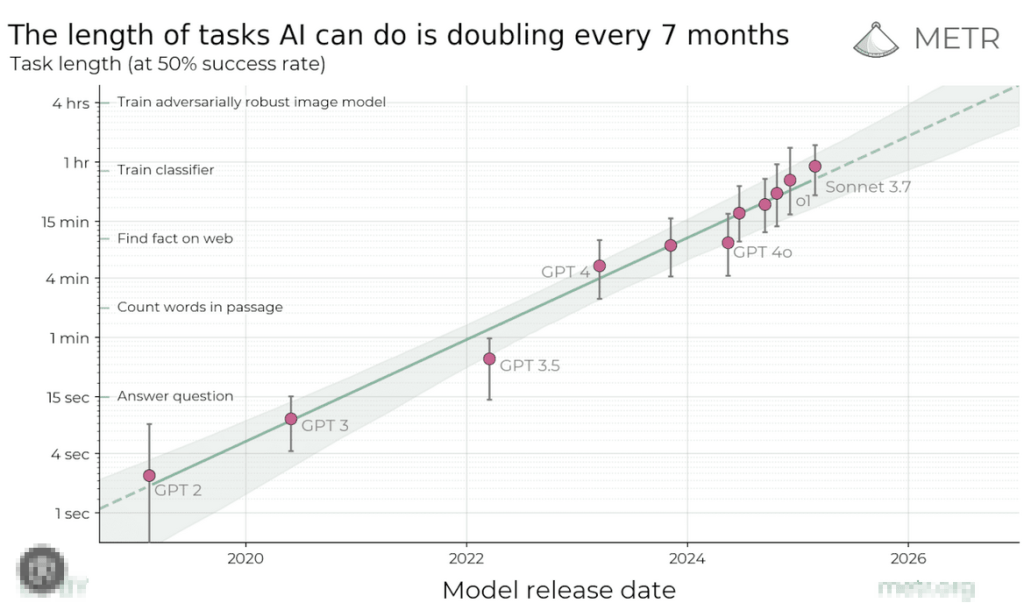
- The length of tasks that AI can do is doubling every 7 months (source link).
- In practical terms, this means AI systems are handling progressively longer, more complex, multi-step problems over time.
- Somewhere around mid 2025 it became really good.
- It feels to me like it crossed a threshold.
I personally have used it to build:
- Conditional Highlighting in Typescript / pulse.
- Variable Access Functions.
- Table Appearance Styling.
- Lastly I used it to migrate Smart Display Formatters to java including sparklines.
The conditional highlighting used some intelligent shading schemes to make it look good in both light and dark theme. The sparklines in java used a graphics2D shader that I myself had no experience of. I migrated from using AI for code snippets to code blocks and finally to entire modules. This was with careful review of all outputs and heavy testing.
Notice: Some areas that I found it most useful were ones that I didn’t know well, java graphics2D and color shading algorithms. That leads to my second point:
2. It’s no longer worth learning a new technology unless you can learn it really well.
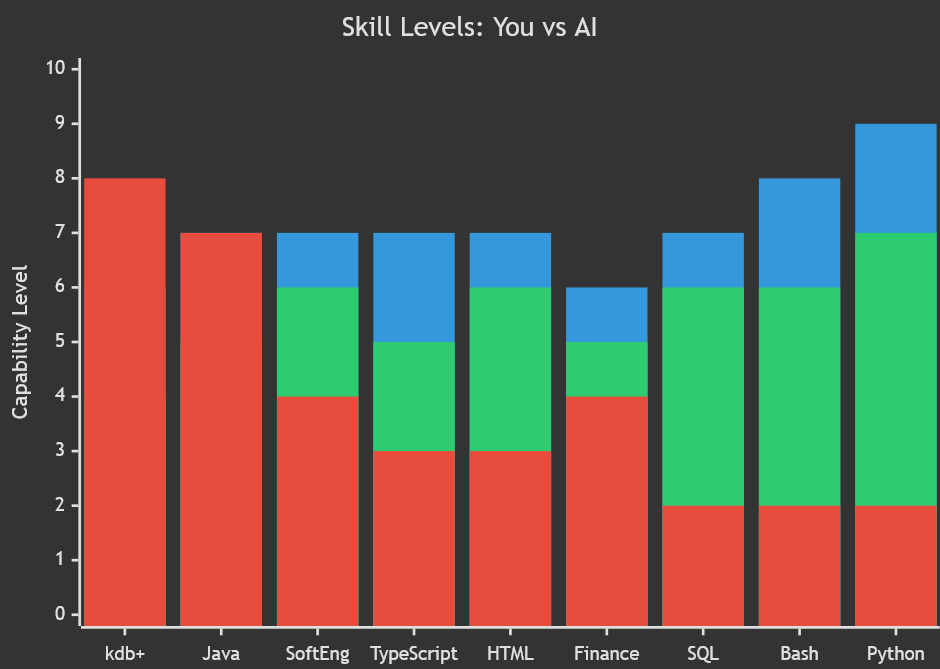
Imagine your skill set as a bar chart, for me it’s: Very strong kdb+, core java. Strong software engineering, typescript, HTML. Middling finance/trading knowledge, SQL. weak bash and python. In the past any incremental increase in python knowledge was valuable so it made sense to learn it as I go. But now add a bar chart showing AIs ability today and AIs ability next year. Unless I can get above AI, there’s very little value to knowing a language worse than AI.
I now never write python or bash, I get AI to write it and I either review or test it.
3. Graduates expecting programming jobs in future are screwed.
I’ve purposefully made this title blunt. I have a nephew that was studying computer science until last year. I don’t want a whole generation to waste thousands on an education that is likely to be a dead end for many.
Considering the bar chart above. Any skill that is currently known by an AI or can be learnt by an AI, few companies will want to invest in a grad to wait years for them to learn. The cost curve for return on investment for a graduate developer moved years out and is at risk of moving further each year.
I did computer science at university, when I first left I was fairly useless. It took years of making mistakes, reading books and input from mentors to make me a net contributor to a project. Companies were already reluctant to invest in 1 year of investment to train someone, now it could be 3 years to beat an AI in some areas even if AI doesn’t get better. I saw this firsthand when I hired someone to work on Pulse. They were smart and motivated. I spent time with them daily on every PR, I encouraged them to use AI. Ultimately the time it was taking to invest and train them outweighed the benefit compared to AI and I had to let them go. Instead I invested in getting better at creating software with AI which allows a 10x to 100x increase in productivity in some areas.
Some people will push back on this and say there’s always jobs and you should still pursue a career you love. That’s partially true. There will be jobs around soft skills, engineering skills for many years going forward but that’s more likely to fall to mid or senior developers that can now multiply their productivity.
- Firms will take years to adjust their hiring, training and approach to fit this new paradigm.
- Computer science and related degrees have expanded massively over the years as many people saw it as lucrative.
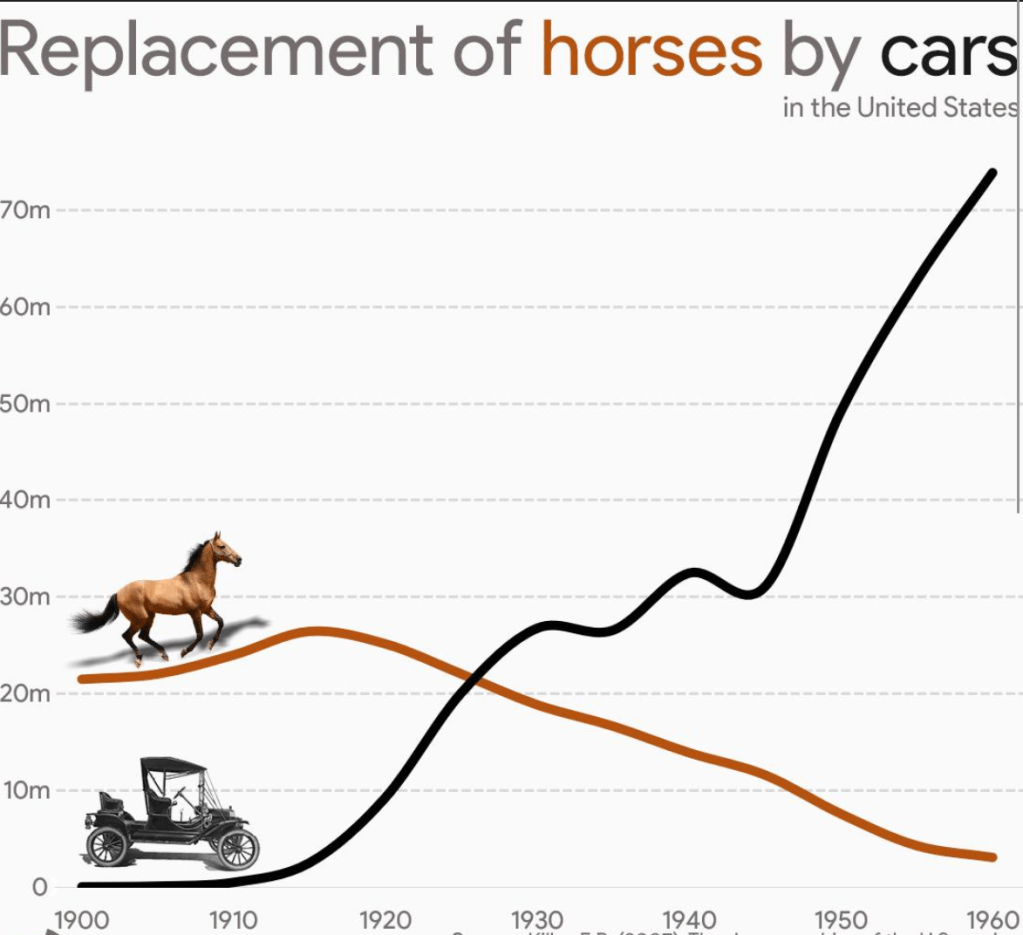
Some that embrace the new AI approach will do well but the majority will not. The graph below shows horses vs cars and how they were replaced between 1910 to 1940. The replacement of entry-level roles for programming will be swifter.
Conclusion
So AI can write software, it isn’t worth learning some technologies, and graduates are going to be out of the job first…
The question in the past was: “How do I become a good programmer?”
Now it’s “How do I become more valuable at solving problems?”
AI may present those that embrace it with asymmetric benefits.
To be continued in future articles…
 Ryan Hamilton